Project description
Iron Ore Pelletizing in VR
Walk into a pelletizing plant with your hands only. The fines yard is ready, with the reclaimer working the pile; the plant comes station by station, in process order, towards voice-guided training.
- Role
- Project lead, with more experienced engineers on the script
- Period
- Aug 2026 – present
- Status
- in progress
- 3D and virtual reality
- Unity 6
- URP
- OpenXR
- Meta Quest 3
- rastreamento de mãos
- C#
- Claude Code
- Codex
Evidence
17 stations in 6 zones, in process order
A count of the route design and of the visiting points built in the app: 3 stations in the fines yard, with 7 visiting points, and 14 in the plant, with one visiting point in each.
Measured.
Frame time on the Quest 3 still being tuned, with 5 of 21 stops failing
Measured on September 23, 2026, on an earlier version, through the device's telemetry: temperature passed; the spikes were on the first visit and in two plant stations with too many draw calls. The current version has not been measured yet.
Measured.
A test with an audience
Not done yet, and the audience for the first pilot has not been chosen. The pilot comes after the zones and the narration.
To be measured.
The goal
To be voice-guided virtual reality training that teaches and leaves room to ask questions while studying. This does not exist in the app yet: today the walkthrough shows the stations in process order, with few signs, and the narration and the teaching flow come in once the zones are ready.
The walkthrough was designed for training, onboarding new employees and institutional visits, in place of an on-site visit, which is expensive, restricted and risky. It has not yet been tested with an audience.
What is ready and what is not
- Ready: the fines yard, with the pile, the bucket-wheel reclaimer, the conveyor with its return underneath, the transfer house with tower and gallery, the dust and the field panel that starts the machine.
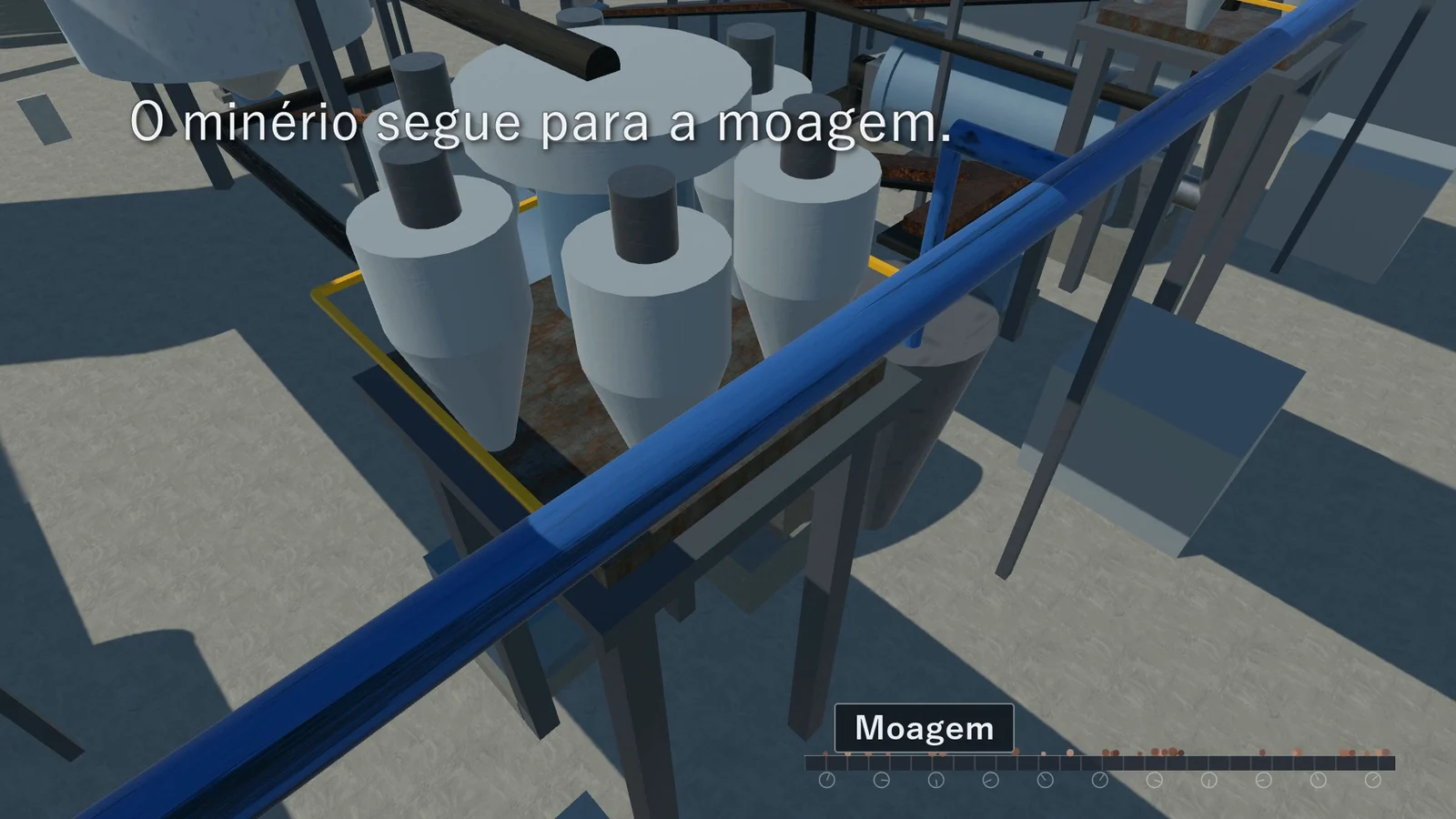
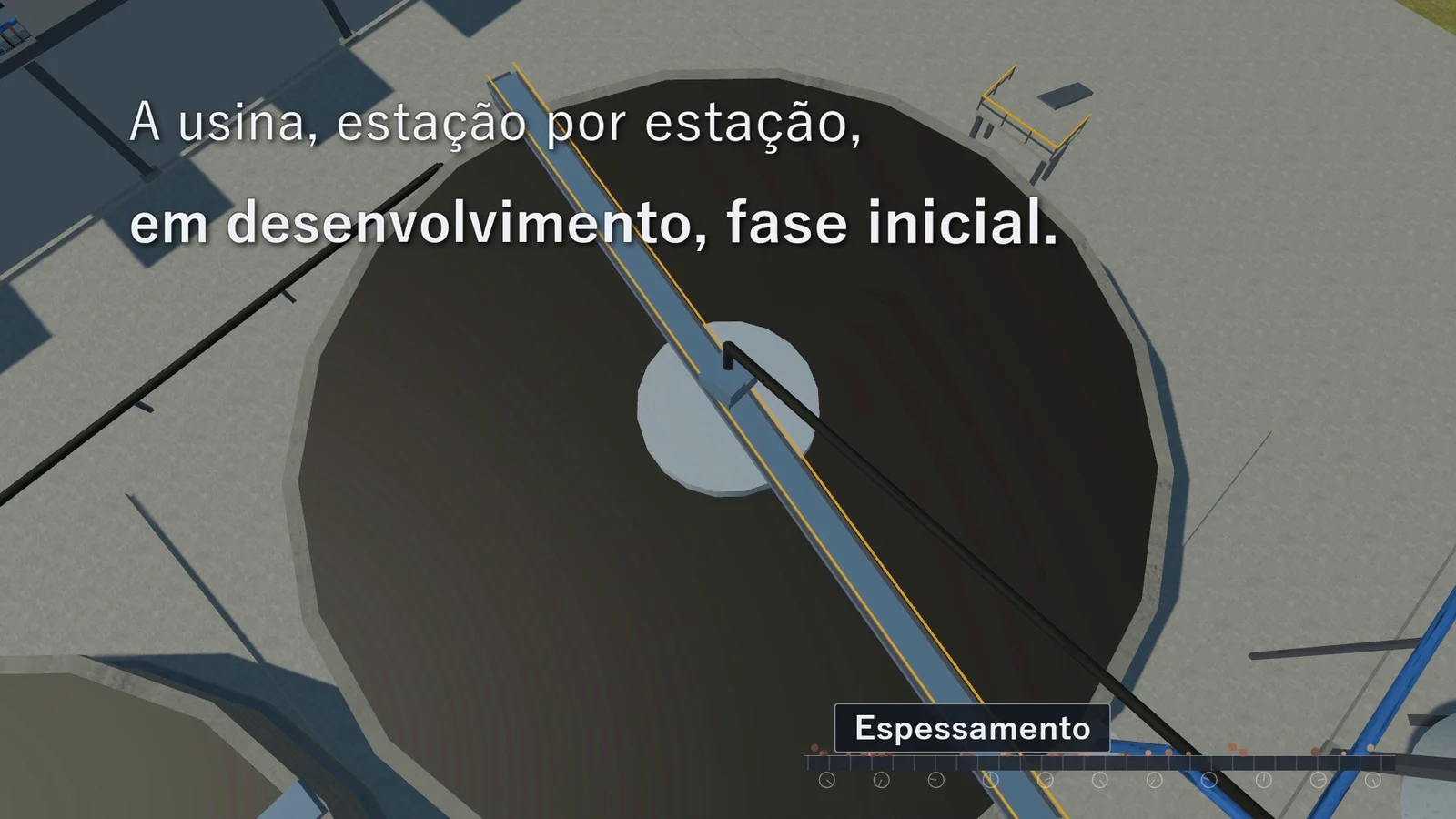
- Under construction: the plant’s 14 stations, from grinding to the pellet yard, in measured volumes and without finish. The mill, the thickener’s bridge, the filters and the balling disc already move.
- Only on paper: the plant’s finish, the narration and the signs, the pilot with an audience and the physical link from the yard’s gallery to grinding.
- In the same app: the electrical room module, behind its own door, presented as another project in this portfolio.
On screen
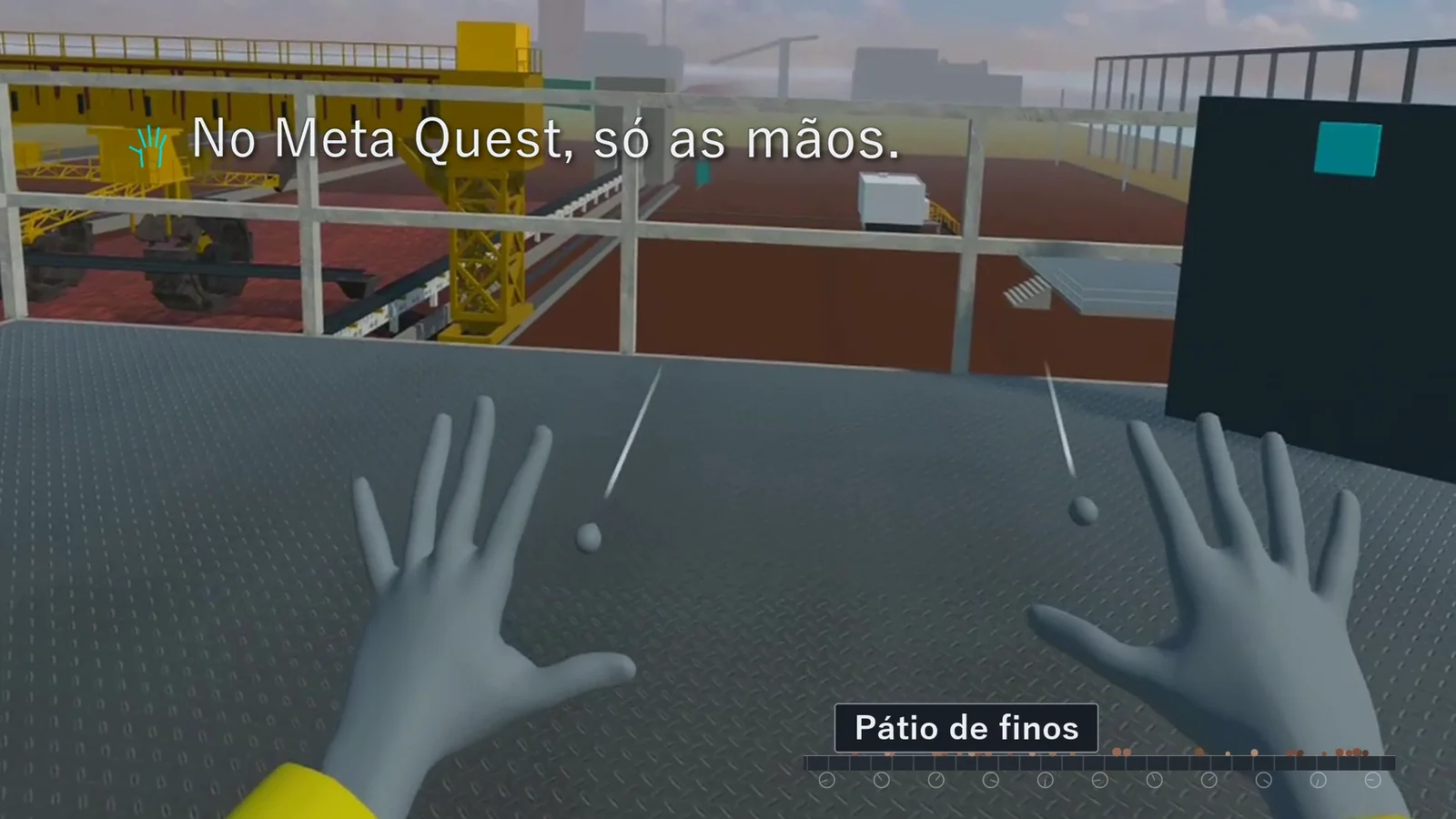
Tap outside the image to close it.
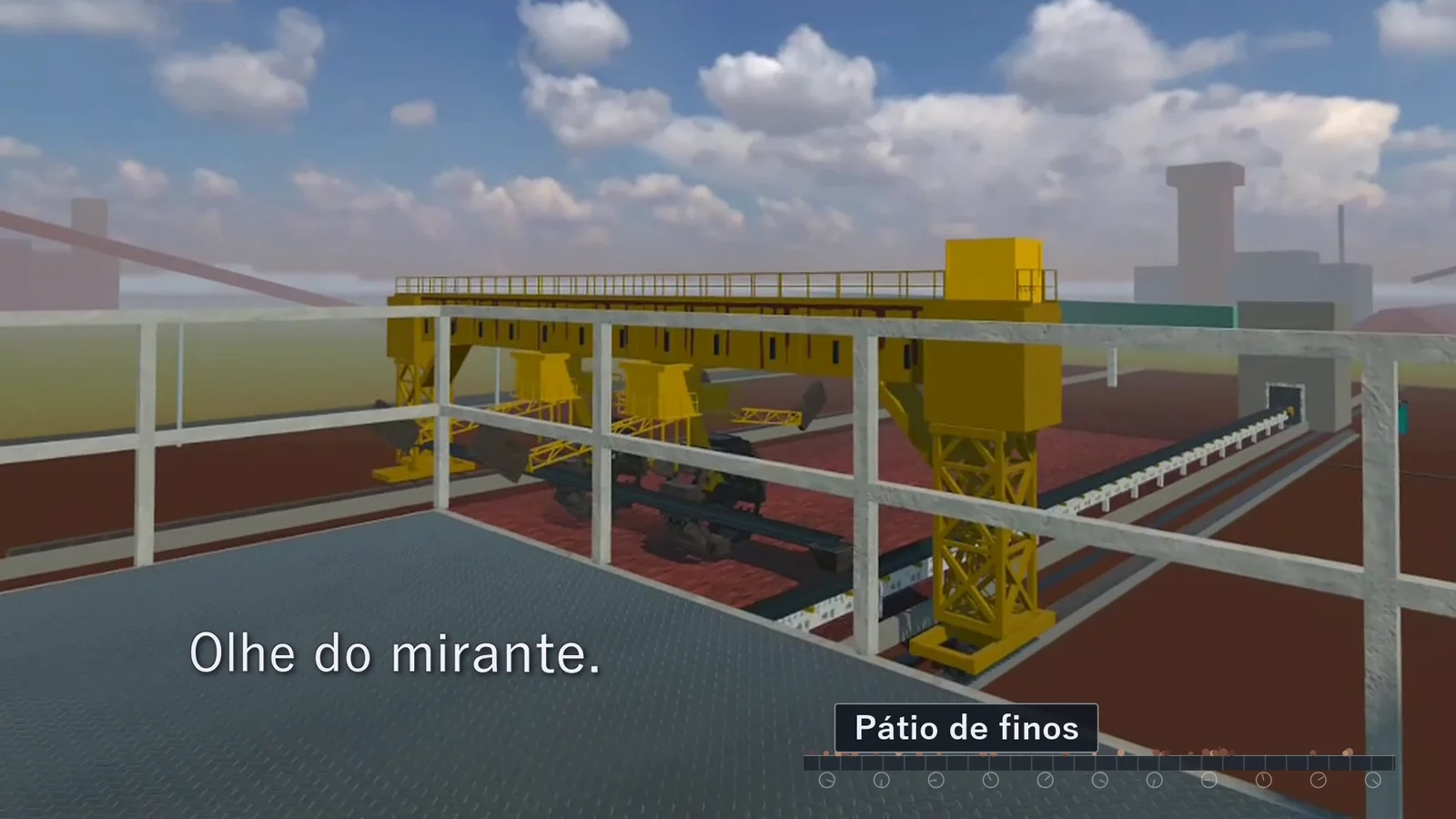
Tap outside the image to close it.
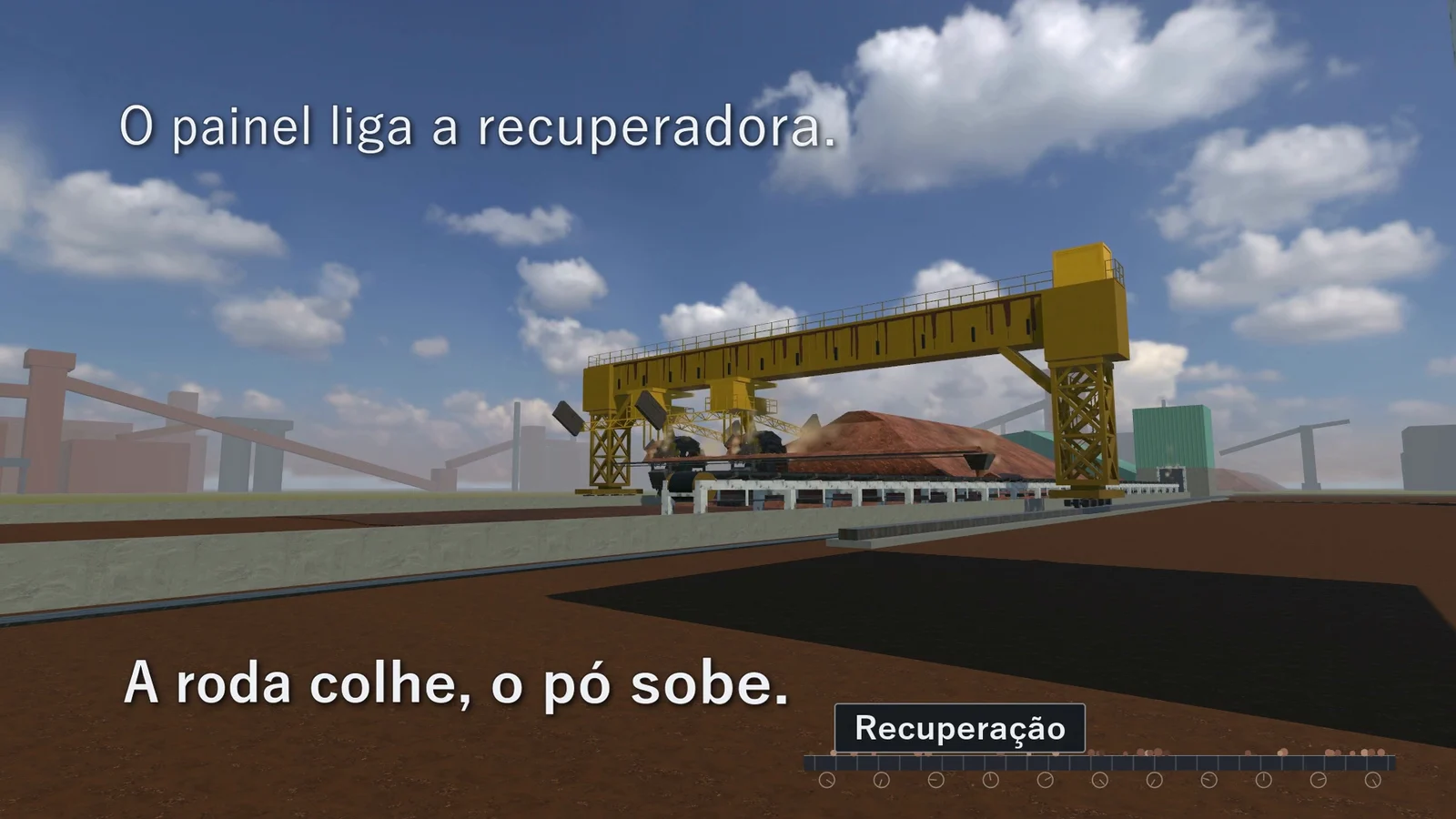
Tap outside the image to close it.
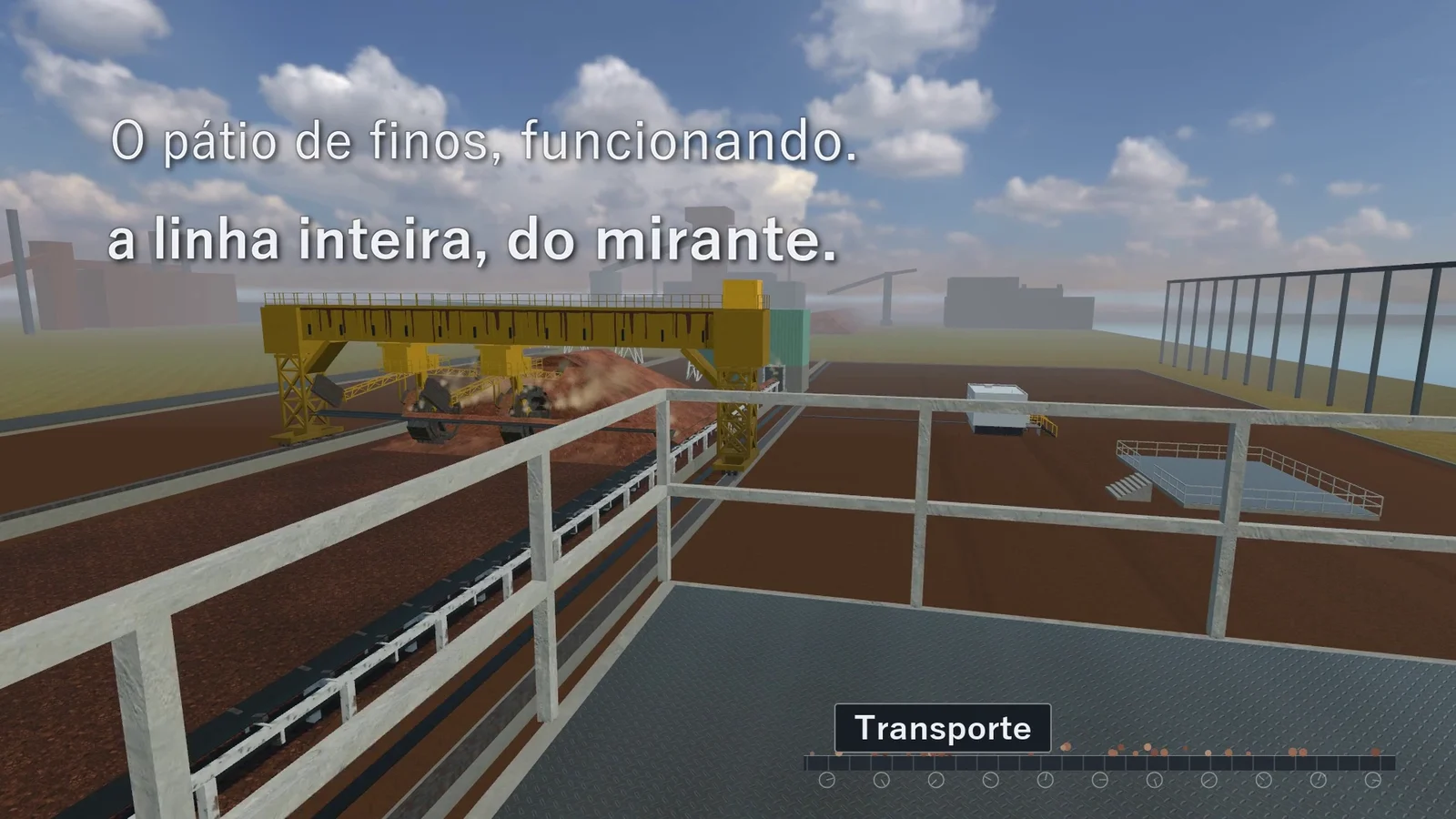
Tap outside the image to close it.
Tap outside the image to close it.
Tap outside the image to close it.
How it works
The map follows the process in order, and the zones are separated by the state of the material: from dry solids in the yard to product in the pellet yard.
- Yard
The fines pile, the bucket-wheel reclaimer, the conveyor and the transfer house.
ready - Grinding
Mill, hydrocyclones, thickener and filtering; coarse material returns to the mill, and water returns to grinding.
under construction - Mixing
Roller press, silos and mixer; the binder falls onto the moving conveyor.
under construction - Balling
On the disc, the pellet is born; the off-size one returns to the disc.
under construction - Furnace
The bed, the thermal stages and the gases; the heat returns to the furnace.
under construction - Product
Discharge, screening and the pellet yard.
under construction
Each zone only sees its neighbors, and the person crosses from one to the next through a short passage: the material makes the long journey; the person does not. Today, between the yard and the plant, the crossing is closed, through a door.
The project thinks in stations, not machines. Where the person stands, what they look at and from how far.
Decisions
Instead of: Modeling machine by machine.
Cost accepted: Each station first needs the viewpoint, the distance and what is seen, and only then the machine.
Instead of: A straight line from the yard to the pellet.
Cost accepted: The map becomes a folded line, and each loop has to be read in the right place.
Instead of: The headset's controllers.
Cost accepted: Walking by pinch is not yet smooth; pointing to teleport works better.
Instead of: Placing and measuring everything by hand in the scene.
Cost accepted: Every meter is generated, never typed, and the plant's domain needs its own tests, outside Unity.
Instead of: Narrating before building.
Cost accepted: Today the walkthrough has few signs, and the guiding voice comes later.
How it was built
- Aug 21The restart
The idea restarts from scratch, in Unity 6 for the Quest 3; the first flow is the yard with the reclaimer.
- Aug 30The map
The map of 6 zones and 17 stations, in process order, with the four loops.
- Sep 1The plant in volumes
The whole plant in reference volumes, and the yard's comfort approved in the headset.
- Sep 13The hands
Locomotion with hands only, by pinch and by pointing to teleport.
- Sep 23The zones before the teaching
The overall plan puts the zones before the narration, and the Quest measurement shows where frame time fails.
- Sep 25The conveyor
The yard conveyor's belt wraps around the pulleys and returns underneath.
I lead the project, with more experienced engineers who help with the script. I choose what to build and judge it in the headset; the development is done with AI agents (Claude Code and Codex), under rules I define.
Today and next
Today
An early-stage prototype. The fines yard is ready; the plant's 14 stations exist in measured volumes, with a visiting point in each one, but still without finish. Since October, the work on the same app has gone to the electrical room module.
Next
- Bring the yard's finish to the plant's stations, starting with the balling disc.
- The narration and the teaching flow, once the zones are ready, towards voice-guided training.
- Measure the current version in the headset and cut the draw calls of the stations that went over the limit.
- A pilot with an audience, after the zones and the narration.
The images are frames from the project's commercial. The first two come from a test recording in the headset, on an earlier version of the app; the others were rendered on the computer from the app's own scene, in Unity, with a scripted camera, and are not the app's locomotion. The text and markers over them belong to the video, not to the app's screens.